
For years, ice has been handled in a simple way: trays in the freezer or the occasional bag of ice. In many cases, that is still enough, so integrating an ice maker is not something that everyone necessarily needs to do.
Not every kitchen needs an ice maker. And that’s perfectly fine. It mostly depends on how the kitchen is used… and on the lifestyle of the person using it.
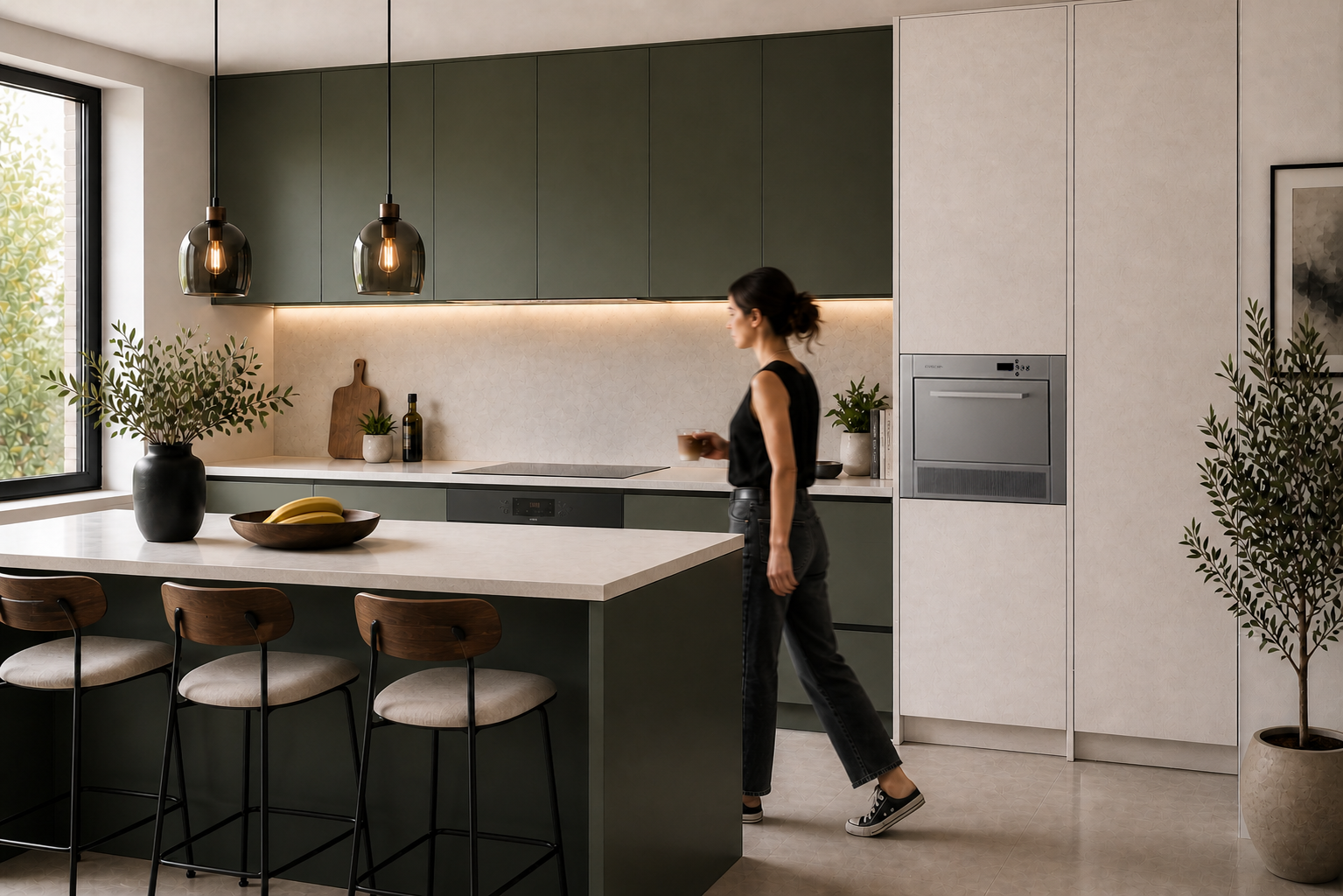
It starts to make sense when ice becomes part of everyday life, when you use it more often than expected or when you realise there is never enough and half of the freezer ends up occupied by trays or bags.
It also fits naturally into projects that aim for a more organised kitchen, where certain everyday gestures are already resolved and the use of space feels more fluid. But beyond design, it has to do with the way the kitchen is lived in: whether it is used daily, whether people gather there, whether long after-meal conversations happen there or whether it is a space that goes beyond pure functionality. Not out of necessity, but out of coherence.
On the other hand, in kitchens used more occasionally or where ice does not play an important role, it probably is not necessary. And that is just as valid.
Frecan’s Ice Maker is designed for that first type of kitchen. It integrates into the cabinetry and allows you to always have ice available without having to think about it or rely on external solutions.
It produces up to 10 kg of ice per day, with 22-gram cubes and adjustable thickness. It also includes a timer, antibacterial tray and integrated drain, making both use and maintenance easier.
But beyond all of that, what really matters is whether the ice maker fits you or the project.
Because in the end, a well-designed kitchen is not the one that has everything, but the one that makes sense and adapts to the way it will actually be used.
Discover more
En esta temporada, nada se compara con el placer de cocinar al aire libre
Comentar