
A few years ago, a wine cooler was the feature that set an ambitious kitchen apart. Today, that conversation has evolved.
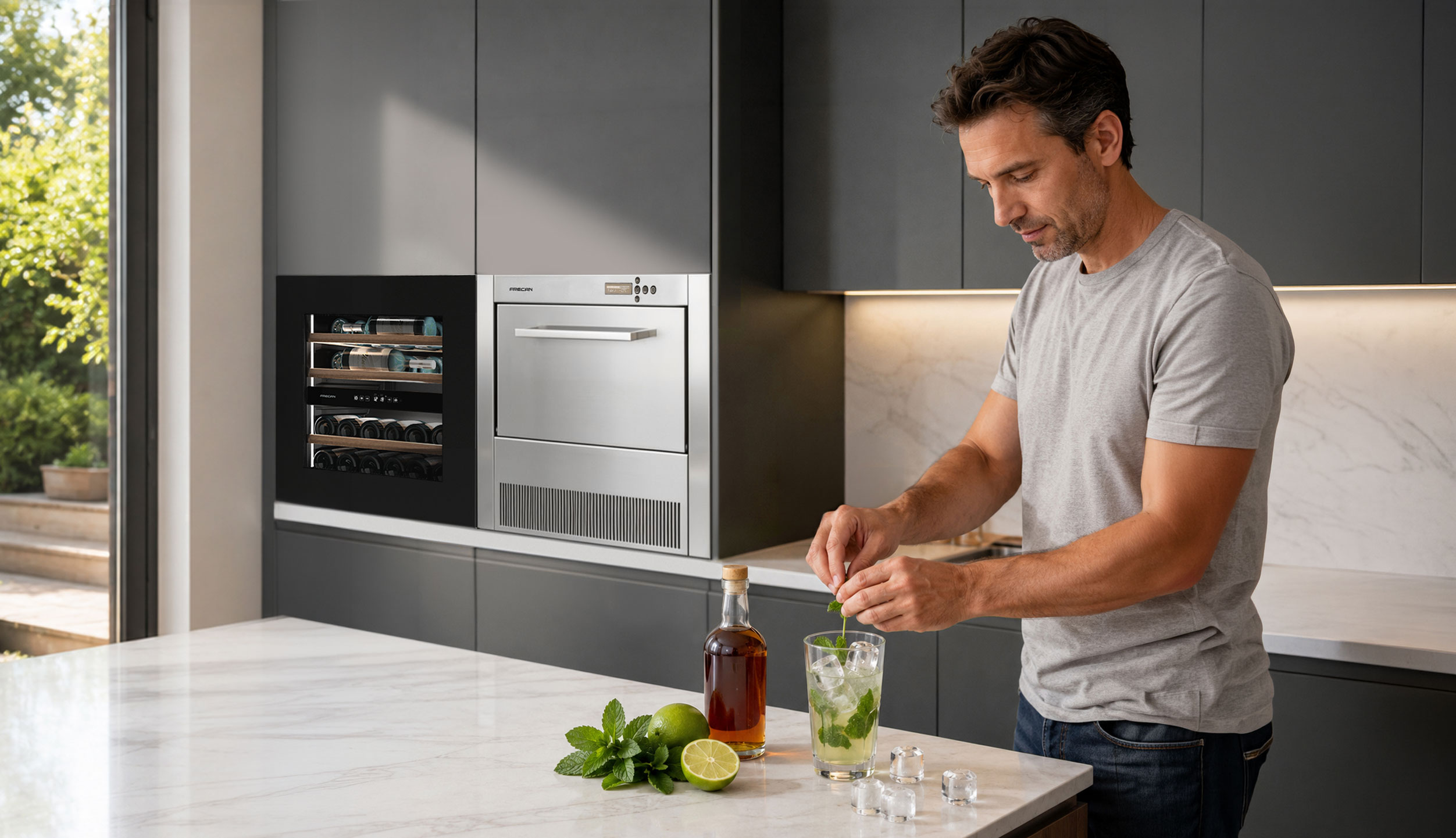
more and more clients are asking for a space designed not only for cooking, but also for serving and entertaining. An island with a cocktail station, a pantry with a wine cooler and beverage fridge, or a covered terrace that becomes an extension of the living area in summer.
This is exactly where an ice maker fits in. It completes the space, allowing it to function independently—without relying on the main kitchen freezer or buying bags of ice before guests arrive.
Why it makes sense to include one in your project
It solves a common inconvenience. Freezer ice is limited and competes for valuable storage space, while buying bagged ice isn’t a solution that fits a premium kitchen.
It also enhances the bar or entertaining area alongside wine coolers, beverage fridges and wine cabinets, reinforcing a space that is becoming standard in mid- to high-end renovations and new-build homes.
From a design perspective, it has a minimal visual impact. It integrates seamlessly into a tall cabinet like any other built-in appliance, without interrupting the continuity of the cabinetry.
Technical considerations
To incorporate it into your project without surprises, keep these key points in mind:
- Overall dimensions: 458 × 595 × 575 mm (W × H × D). Fits within a standard 600 mm cabinet.
- Installation: built into a tall unit with front ventilation and the required clearance as specified in the catalogue.
- Connections: mains water supply, 230V electrical connection and drain. Two drain outlets provide greater installation flexibility.
- Production: up to 10 kg of ice per day, producing 12 cubes per cycle (approximately every 35–40 minutes).
One important point: the appliance produces ice on demand, it is not designed to store ice long-term like a freezer. The internal storage bin stops production automatically when full and can be programmed to start and stop, ensuring ice is ready exactly when needed.
It also features an antibacterial storage bin, designed to dry efficiently and prevent moisture build-up.
Where it works best
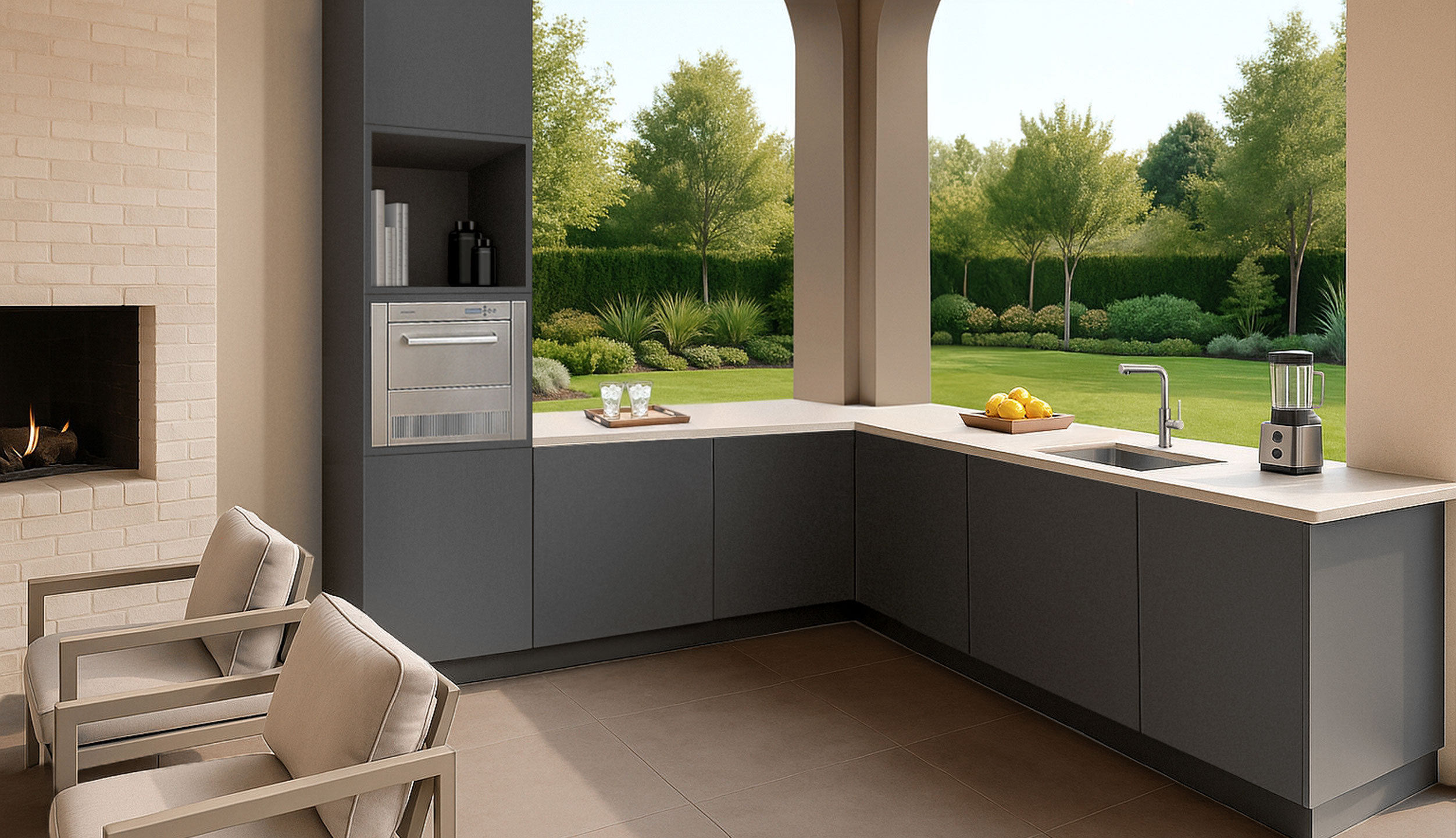
This appliance is particularly well suited to:
- Next to a wine cooler or wine cabinet, creating a dedicated serving area within the kitchen or pantry.
- Islands with an integrated bar facing the living or entertaining space.
- Outdoor kitchens or covered terraces, where having ice readily available without returning to the main kitchen makes a noticeable difference.
It’s one of those appliances that rarely takes centre stage—but quickly becomes one of the most appreciated features in everyday use.
Comentar