
Sometimes a fortune is invested in the best kitchen materials and, after the first few weeks of use, something just doesn’t flow.
You lack prep space next to the cooking area, cleaning becomes tedious, or movement through the space feels forced. That’s a lack of ergonomics.
Designing a kitchen is not just about making cabinets fit aesthetically; it’s about ensuring that technology and layout work in your favor. Here we analyze the three most common mistakes in kitchen projects and how to solve them with professional criteria.
1. The distance mistake: the unnecessary “walk”
The most common layout mistake is placing the water zone (sink, tap) too far from the cooking area (hood, cooktop). Crossing the kitchen with a heavy container or a pot of boiling water to drain pasta is not only inconvenient, but also an unnecessary risk.
- The solution: The main preparation area should always be located between the sink and the cooktop. Ideally, these two points should not exceed one and a half meters. It’s the difference between cooking smoothly or ending the day with avoidable fatigue.
2. Visual comfort and obstacle prevention
Ergonomics also means adapting element heights to the people who will use the kitchen. Ignoring this detail can compromise everyday comfort:
- Extraction choice: Depending on user height, a poorly positioned wall-mounted hood can limit visibility of the cooking area or even cause accidental bumps. For taller users seeking full visibility, ceiling hoods or integrated extraction systems (Flow series) are ideal. They completely clear the field of view, allowing for a more natural and upright posture.
- Precision hygiene: Most cooktops leave a small edge where dirt accumulates. Flush installation (where the glass and countertop form a single plane) is not just aesthetic; it’s ergonomics applied to cleaning. It allows you to wipe surfaces smoothly and move containers without obstacles.
3. Height fatigue: protecting your back
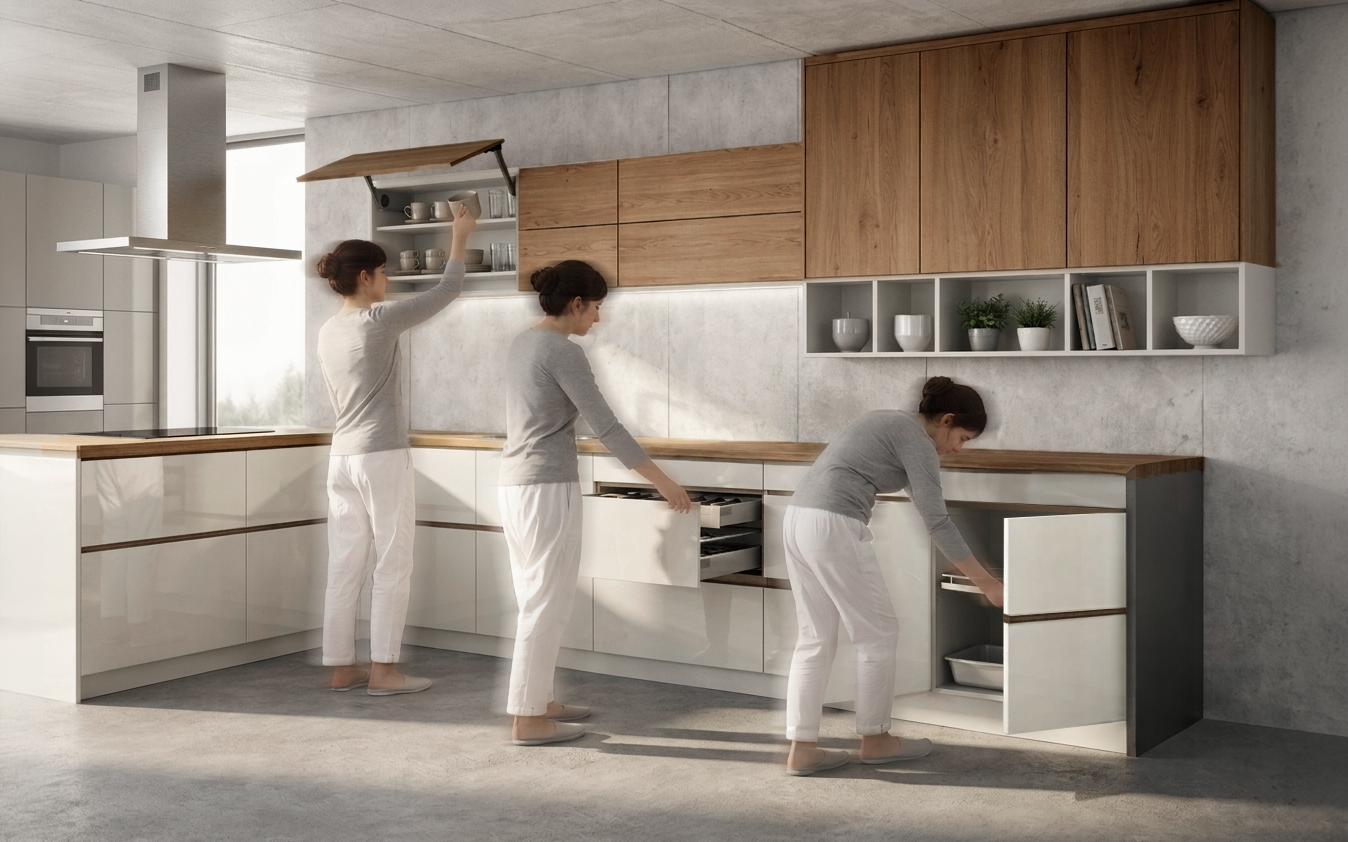
A high-level ergonomic design should minimize forced movements. A common mistake is placing frequently used elements in positions that require constant stretching or bending.
- Column integration: As with ovens, integrating a wine cooler into a tall unit provides ergonomic access. Keeping bottles at eye level avoids unnecessary strain on the lower back.
- Under-counter access: If the design requires an under-counter unit, it is essential to place it in a clear circulation area. Ergonomics also means anticipating movement: ensuring that opening a door or pulling out a shelf does not block workflow.
Conclusion
An ergonomic kitchen is one you don’t notice using because everything is where it should be. Cooking, extraction, and service technology should adapt to your habits and physical needs, not the other way around. Before choosing door finishes, take time to plan how you will move between them.
Discover more
Soluciones de recirculación para cocinas sin salida de humos
Comentar