
Years ago, having a kitchen island was uncommon. Today, it’s almost the opposite: in many renovations and new projects, the island is the first thing people think about.
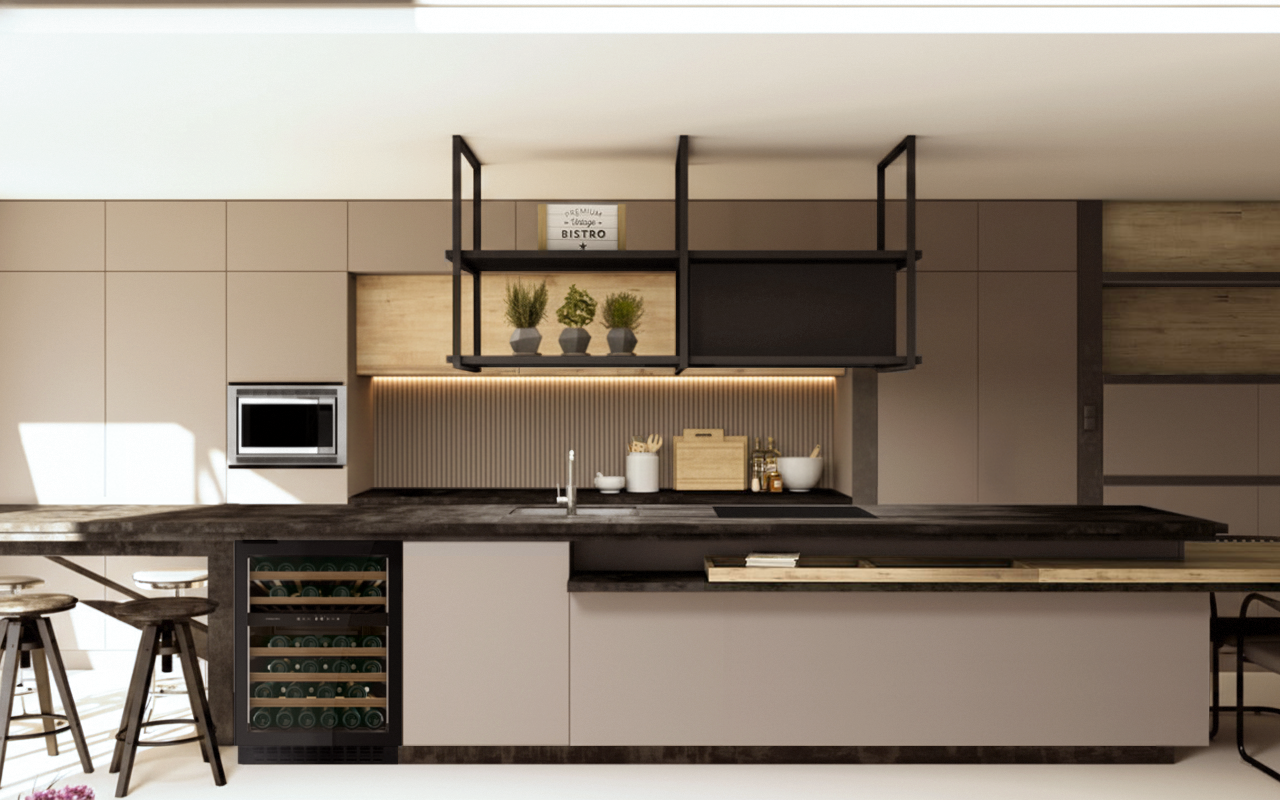
Years ago, having a kitchen island was uncommon. Today, it’s almost the opposite: in many renovations and new projects, the island is the first thing people think about.
The way we use the kitchen has changed, it’s where we have breakfast, talk, work, study or enjoy a glass of wine while someone prepares dinner.
The island sits right in between cooking and living.
How an island changes the way a kitchen is used
When a kitchen has an island, everything is organised differently.
People don’t stay on the outside watching, they come closer, sit down and take part. And the person cooking is no longer turned away from everyone else, but at the centre of what’s happening.
That’s why a well-designed island makes the kitchen feel more open, more comfortable and more social. It’s not just another piece of furniture.
Not all islands work the same way
This is where many projects fall short.
Some islands are designed only as extra worktops or bars, others include storage, and many, increasingly, incorporate the cooking zone, the sink… or both.
But when an island includes a cooktop or sink, it becomes the most demanding area of the kitchen: movement, heat, steam, smells, splashes and noise are all generated right in the middle of the space.
If this isn’t carefully planned from the start, the kitchen can become uncomfortable, no matter how good it looks.
What it means to cook on an island
Placing the cooktop on an island means steam is released into the centre of the room, odours spread more easily, and extraction noise becomes more noticeable if it’s not properly resolved.
That’s why, in an island kitchen, the choice of hood and how it’s integrated is not a minor detail, it’s what makes the difference between a pleasant space and one that becomes tiring.
The good news is that today there are extraction systems designed specifically for islands, capable of removing steam and odours without filling the living area with noise or compromising the look of the space.
What about the sink?
When the island includes the sink, it becomes a true working hub. That’s why it’s important to carefully plan the dishwasher integration, tap height and type, and the sink design, so everything works without invading the social side of the kitchen.
In the next article you’ll find different ways to resolve this area well.
The island as a point of connection
In an open-plan kitchen, the island is also experienced from the living area. That’s why it increasingly incorporates elements that go beyond cooking: support surfaces, storage or spaces for bottles and glasses.
An integrated wine cooler, for example, allows the island to be part of both the cooking moment and the time spent enjoying it afterwards.
–
In short, a kitchen island is not a trend or a whim. It’s a different way of living the space.
When it’s well thought out, the kitchen becomes more comfortable, the space feels more open, cooking no longer isolates you from others, and everything flows more naturally.
Because a good island isn’t there to show off, it’s there to make the kitchen work better.
Comentar